Zenday
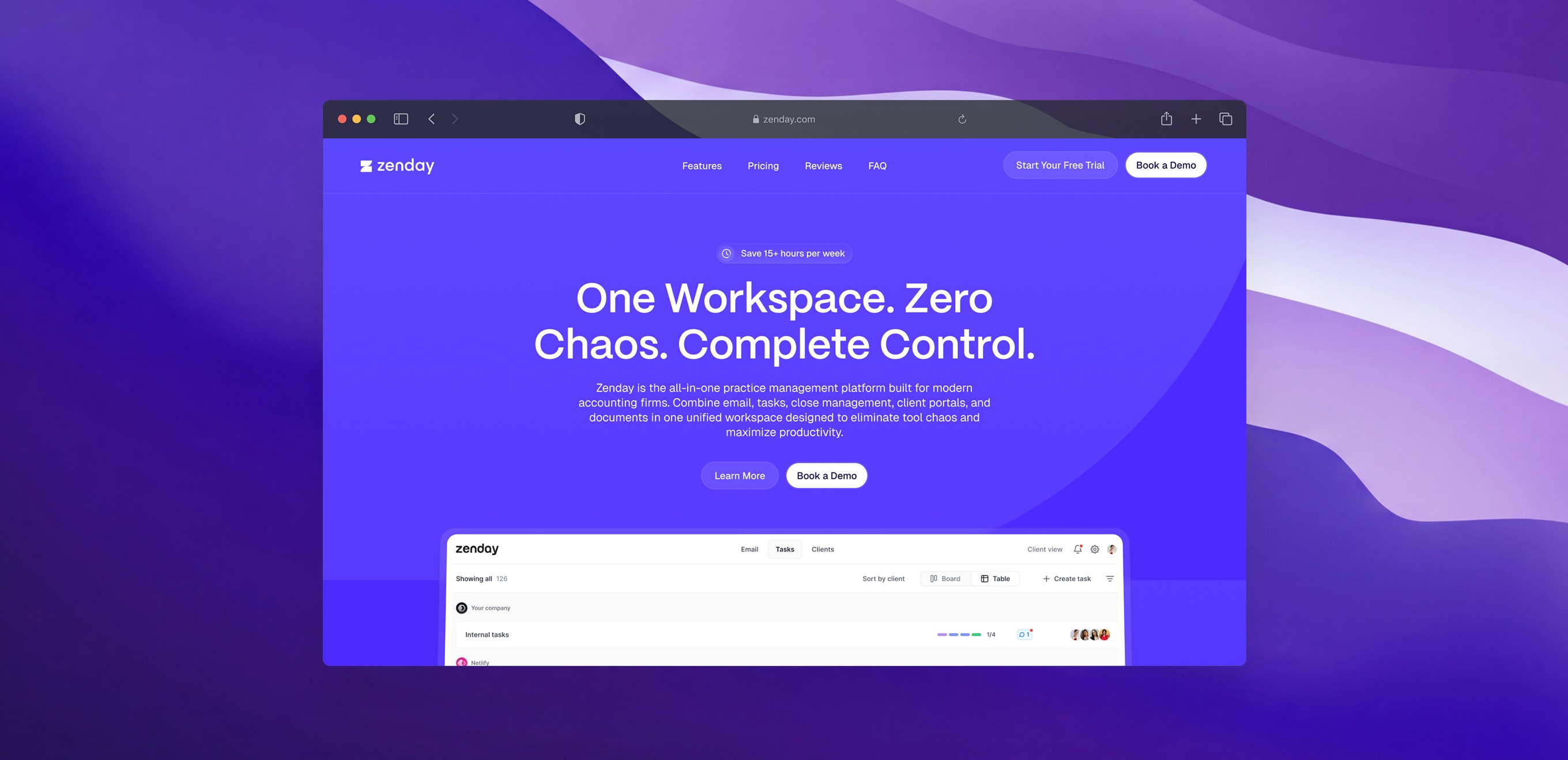
A unified accounting platform for modern bookkeeping firms
Zenday simplifies accounting operations for bookkeeping firms and accounting teams. It centralizes workflows, automates task management, and connects client communication, bookkeeping work, and documents in one place so firms can run faster and more accurately.
Accounting firms deal with constant pressure. Endless client messages, missing documents, unclear responsibilities, and bookkeeping work spread across inboxes, spreadsheets, and separate tools. The result is slow turnaround times, overwhelmed teams, and frustrated clients who expect real clarity but rarely get it.
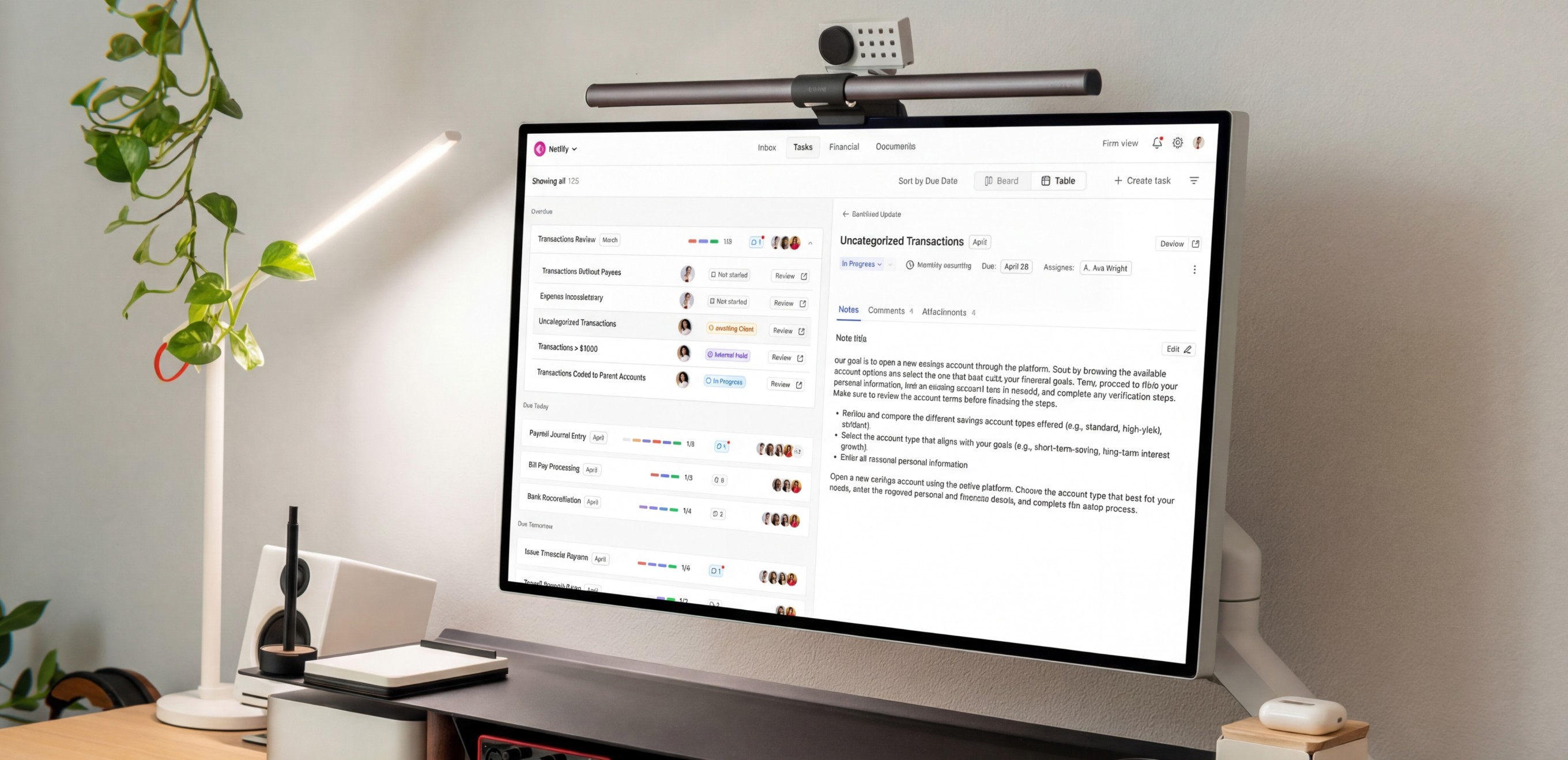
Zenday fixes this by giving accounting firms one operating system for all client work. It brings tasks, communication, bookkeeping updates, and document requests into a single unified platform so firms always know what needs to be done, who owns it, and what is still missing. Instead of juggling tools, teams work in one place where the entire process is executable from start to finish.
Zenday was built with accounting firms from the US, translating real world bottlenecks into simple flows that remove friction. By automating repetitive work and creating structured processes, firms reduce time spent chasing clients, lower error rates, and increase their capacity without growing headcount.
This is how Zenday is redefining daily operations for modern accounting firms that want to scale without chaos.
Strategic objectives

Unify task and email management for firms
Give firms one place where all client communication and work come together so nothing gets lost.
Integrate with core bookkeeping systems
Connect seamlessly with QuickBooks, Xero, and NetSuite so accounting work flows directly into Zenday.
Build financial dashboards clients actually use
Turn raw financial data into simple, clear insights that help clients of accounting firms make better decisions.
Automate recurring work for accounting teams
Generate tasks automatically based on work cycles, monthly closes, and recurring tax obligations.
Bring bookkeeping data into the workflow
Let firms complete bookkeeping related tasks inside Zenday by pulling real time data from their accounting systems.

Most prominent features
Unified task management
All client tasks, questions, and responsibilities land in one place for the entire firm.
Centralized client communication
Email and messages connected directly to tasks so no context is lost.
Bookkeeping integrations
Connect QuickBooks, Xero, and NetSuite to sync data directly into workflows.
Automated task generation
Monthly, quarterly, or yearly tasks created automatically based on firm templates.
Client dashboards
Financial insights dashboards showing clients their financial status, pending actions, and firm updates.
Full activity history
Every action, message, and change logged so firms always have a clean audit trail.
Document library
A dedicated space where all accounting documents are stored and instantly accessible to clients.
Client mode
Focus on a single client at a time with an inbox and tasks filtered to that relationship.
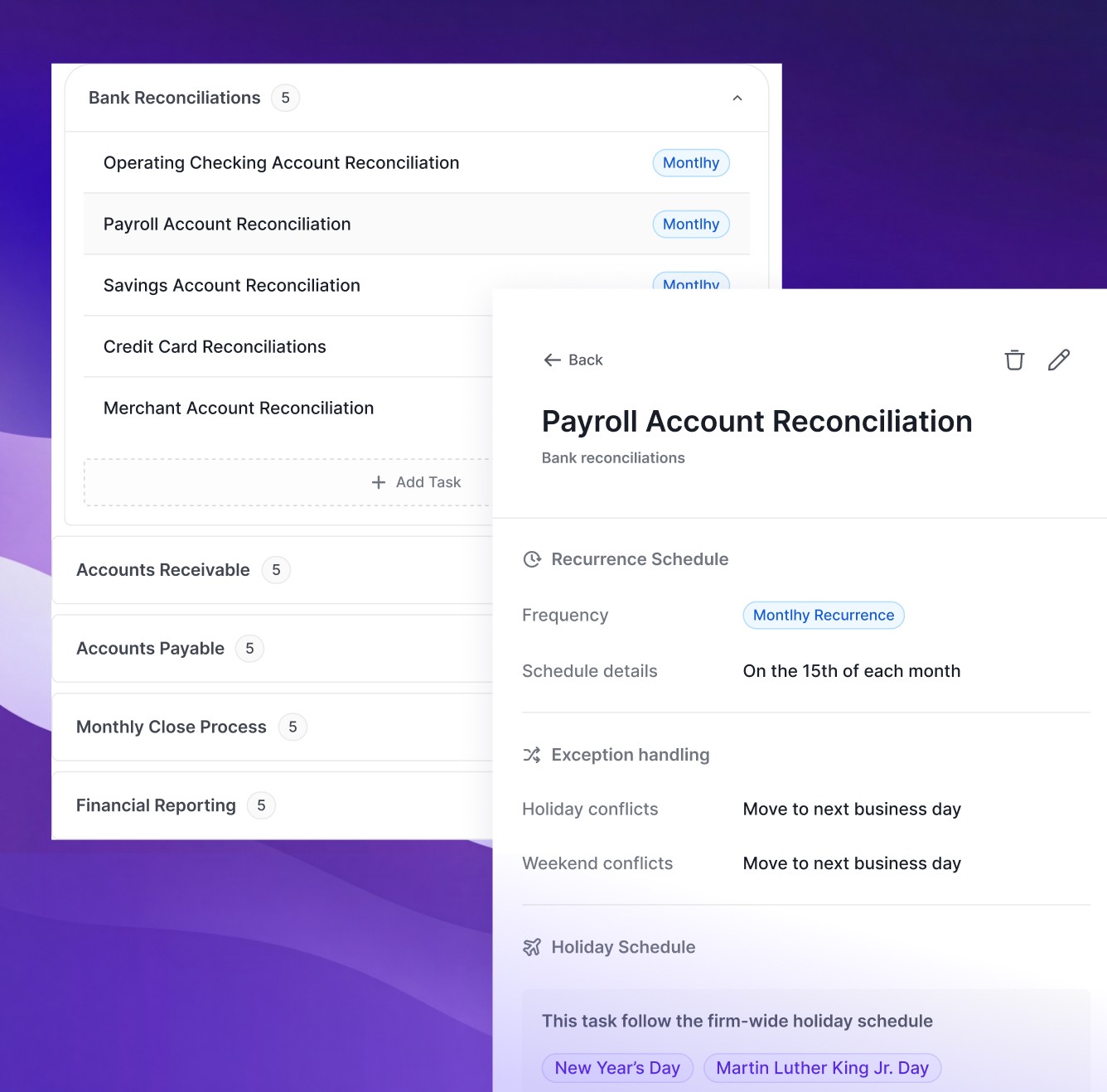
Proven results that show how Zenday transforms daily operations for accounting firms
Faster turnaround times. Firms reduce delays by unifying communication, tasks, and bookkeeping updates in one place.
Clients get clearer updates, cleaner dashboards, and better visibility into their financial status.
Increased firm capacity without new hires. Recurring work is automated, missing information is reduced, and teams handle more clients with less effort.
Product Development Process
Zenday started with a simple observation. Accounting firms were drowning in tools that were never designed for how accountants actually work. Email in one place. Tasks in another. Bookkeeping systems separate from communication. Documents scattered. Nothing connected. Work was slipping through the cracks because the workflow itself was broken.
We spent weeks inside firms across the US to understand the real workflows and pains of accounting firms. From onboarding clients to document collection to monthly bookkeeping to year end processes. What we saw was pretty clear. Firms were not suffering from lack of effort or strategic capabilities. They were suffering from lack of structure. Zenday needed to solve that, not by throwing more features at the problem, but by building a system that allowed firms to run their entire client operation in one platform that vertically integrates with their firms.
The first prototype was intentionally narrow. It focused on connecting email, tasks, and client information into a single product. Early test users immediately saw the impact of a tool like that and complaint about the lack of UX in other accounting software. That gave us our direction. If we could keep combining fragmented work into one seamless product, firms would feel a level of calm and clarity they had not experienced before.
We continued by watching how real teams used the product. Partners, bookkeepers, and junior staff each had different needs, and we adapted the interface to match their roles. Partners wanted high level visibility. Bookkeepers needed focus and speed. Operations teams wanted consistency. The Zenday product grew by respecting these differences without complicating the product.
As we expanded the feature set, we kept one rule. Every addition had to remove friction, not add it. Document management was added when firms struggled to keep track of attachments buried in emails. Client mode was introduced because staff lost time switching mental context between dozens of clients a day. Recurring task automation came from observing how many firms copy pasted the same monthly tasks without any smart automation.
Throughout the build, we heavily leveraged the founder’s domain expertise and ran feedback loops with firms to validate assumptions and uncover hidden problems. We learned how accountants think, how they prioritize, how they collaborate, and what slows them down. Those insights shaped both the interface and the logic behind the product.
The product development process was never about building a competitive checklist. It was about solving a real operational problem inside accounting firms. By combining clear interfaces with a workflow driven architecture, Zenday became a tool that fits naturally into the daily life of a firm. A system that reduces noise, restores clarity, and gives teams the confidence to deliver consistent, high quality work.
Technical Approach
Zenday is built on a workflow centered architecture designed to match how accounting firms operate in real life. Instead of connecting a set of isolated features, the system organizes everything around the flow of client work. Tasks, communication, documents, and bookkeeping data all link back to a single source of truth so nothing lives in isolation.
At the backend level, Zenday uses a modular service layout. Each core domain, such as tasks, communication, and document management, runs as a separate module. This gives the platform long term flexibility and allows new capabilities to be added without disrupting existing workflows. It also ensures performance stays consistent even as firms scale their client base.
Data integrity and separation were priorities from day one. Each firm’s environment is isolated at the data layer to protect sensitive financial and client information. The architecture supports multi tenant delivery while keeping boundaries strict, which is essential for accounting firms working with confidential data across dozens of clients.
The platform integrates with bookkeeping systems like QuickBooks, Xero, and NetSuite through a unified data layer. This allows Zenday to sync bookkeeping information into tasks and client views, enabling firms to complete bookkeeping related work without switching tools. The sync is optimized for reliability so firms never operate on outdated numbers.
The frontend uses a component driven structure built for clarity and speed. Interfaces load quickly, adapt to user roles, and focus on reducing cognitive load. Every screen is designed to show only what matters to the person doing the work, whether that is a bookkeeper handling thirty clients or a partner reviewing high level status updates.
Security, auditing, and permissions are built into every layer. Sensitive actions are logged, access is role controlled, and client boundaries are enforced throughout the system. This creates the trust and reliability accounting firms need for daily operations.
Methodology
Our methodology for building Zenday was simple. Stay as close as possible to the daily reality inside accounting firms and let real workflows dictate what the product becomes. We avoided fixed roadmaps and instead built in tight cycles shaped by direct observation, feedback, and measurable outcomes.
We started by defining the smallest version of Zenday that could replace one broken part of the workflow. Once firms began using that version in real client cases, we gathered feedback daily. Every hesitation, every misclick, every workaround became input for the next iteration. This ensured we were not guessing what firms needed. We saw it directly.
Each cycle focused on one goal. Make work faster, not more complicated. Reduce steps, not add features. Bring clarity, not more information. If something added friction, it was redesigned or removed completely. The methodology rewarded simplicity, because simplicity is what improves operational flow inside firms.
We also kept decisions grounded in user behavior, not opinions. Partners, bookkeepers, and operations staff often had different needs, so we validated every change across multiple roles before shipping. This helped create a product that works for the entire firm, not just one group.
Reliability was another key part of the methodology. Every feature had to behave consistently across edge cases because accounting workflows break when tools are unpredictable. We used regression checks, scenario testing, and staged rollouts to protect stability without slowing progress.
By keeping the feedback loop tight and the decision making grounded in real work, Zenday grew into a system that firms could use every day without training or documentation. The methodology ensured the product remained practical, predictable, and shaped entirely by the people who depend on it.
Conclusion
Zenday was built to give accounting firms a calmer, more structured way to run their client work. By combining communication, tasks, documents, and bookkeeping data into one workflow, the platform removes the chaos that slows firms down. It replaces scattered tools with a system that brings clarity to every part of the relationship between a firm and its clients.
The result is a platform that feels natural to use, scales with the firm, and supports consistent, high quality work without adding more overhead. Zenday helps teams work faster, communicate clearly, and serve more clients without sacrificing accuracy.
For modern accounting firms that want to grow with confidence, Zenday provides the operating system that keeps everything running smoothly.

“This project demonstrates the power of AI to unlock decades of knowledge and make it accessible to everyone.” –
.webp)