Abundance of Opportunity

I’ve got a thing for creation. From the very beginning of my childhood to where I am right now, I’ve always been intrigued by creating something.
I’ve got a thing for creation. From the very beginning of my childhood to where I am right now, I’ve always been intrigued by creating something. While things started with little woodworks and electric devices when I was young, they soon became digital products as I ventured into adulthood.
Creation requires creativity, persistence, and vision. It can bring a team down when progress is stuck and create a feeling of euphoria once the work finally clicks. It’s very much like life in general; as soon as the flow arrives, things can go smoothly and feel effortless.
One thing not everyone realizes is the type of game they’re playing within the world of product building. Is effort going into a digital product that solely persuades consumers to buy more? Or are the products being built enhancing people’s lives, making organisations more efficient, or making communities safer?
Consider this: although we are all developing digital products, whether as a founder, designer, or developer, the purpose behind the products being created is something we should all be conscious of.
Over the years of building a wide spectrum of digital products at Eli5, I've realized there’s a significant difference between the products built when considering the purpose behind them and their long-lasting effects, or the lack thereof.
For example, consider a campaigning website for a shoe brand aimed at selling more shoes. Although these kinds of projects allow for much creativity, their main goal is to make people buy more shoes. They might be temporary and not positively impact people’s lives significantly. Such a website might only be online for a limited time, and the only lasting aspects could be an award it won or the environmental cost of those shoes.
In many ways, these projects represent a zero-sum game. This realm of digital product development is where competition is fierce, resources get wasted on pitches, and creators focus on awards, conversion rates, and other superficial metrics. For agencies, the profit margins are tight, and once a product is delivered, they immediately need to think about the next one.
By choosing to create products that bring about substantial improvements and moving away from the zero-sum game filled with empty buzzwords, we find ourselves in a collaborative world brimming with opportunities.
There's a significant demand for designers and engineers who craft digital solutions. Whether it's a backend system running complex processes or a front-facing tool like a mobile app, website, or desktop application, there's much to be done. Why not focus on projects that genuinely enrich the world?
For instance, we recently launched a RegTech product for a multinational corporation. In this context, it's a web application (designed with a specific approach, for those curious). This tool reduces the time required for regulatory compliance from twenty-four months to just six. Given its global rollout and the enhancement it offers to countless compliance experts, its impact is profound.
By developing this solution, we've paved the way for additional products to integrate with or build upon this RegTech tool. Furthermore, our ongoing feedback loop with its users has revealed numerous potential improvements.
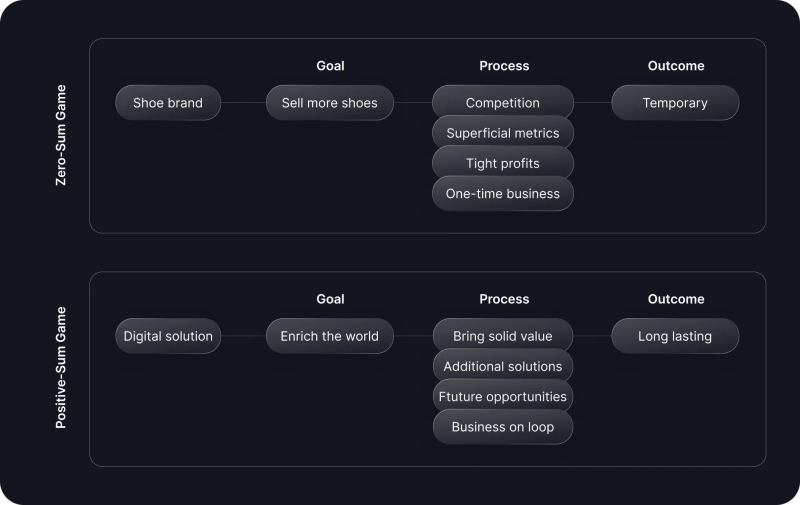
My point is that while some endeavors might be fleeting, others open doors to boundless possibilities. By choosing to concentrate on the latter, a team might soon find more opportunities than once seemed possible.
The first step to start your modernization journey
Software modernization and architectural rebuilds lie at the heart of Eli5. We solve complexity to deliver direct business value by focusing on pragmatic, cloud-native transitions.
Before you decide whether to wrap your legacy system, buy a new SaaS product, or use AI to build custom tools, you need total visibility into your current tech landscape.
Would you like to book a free brainstorm to discuss your legacy stack? It is the essential first step to turning your technical debt into a scalable, modular future.